When a fomo trader links a wallet, their whole trail goes public — and the people watching for it get there first. Signal watches for you, and pings you the second it happens.
Every other fomo tool is a search box. You type a name, it tells you what already happened. That's a history lesson, not an edge.
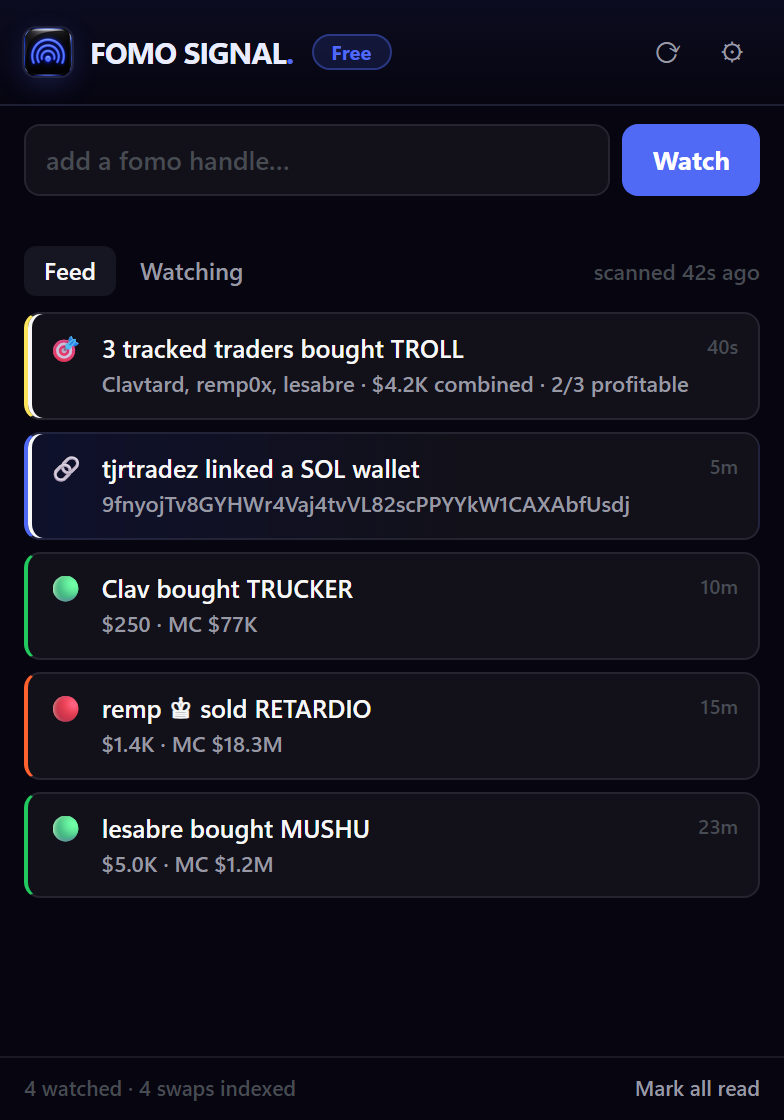
The actual alpha moment. A trader attaches a wallet to their fomo profile and their buying history becomes readable by anyone who's looking. Almost nobody is looking in the first minute.
the one that matters
Read straight off the chain — size in dollars, the token, its market cap at the time, and a link into DexScreener. Set a floor so dust never reaches you.
with size and market cap
Three traders you track buying the same token inside ten minutes — weighted by their own realised record, so you can see whether it's sharp money agreeing or three people being wrong together.
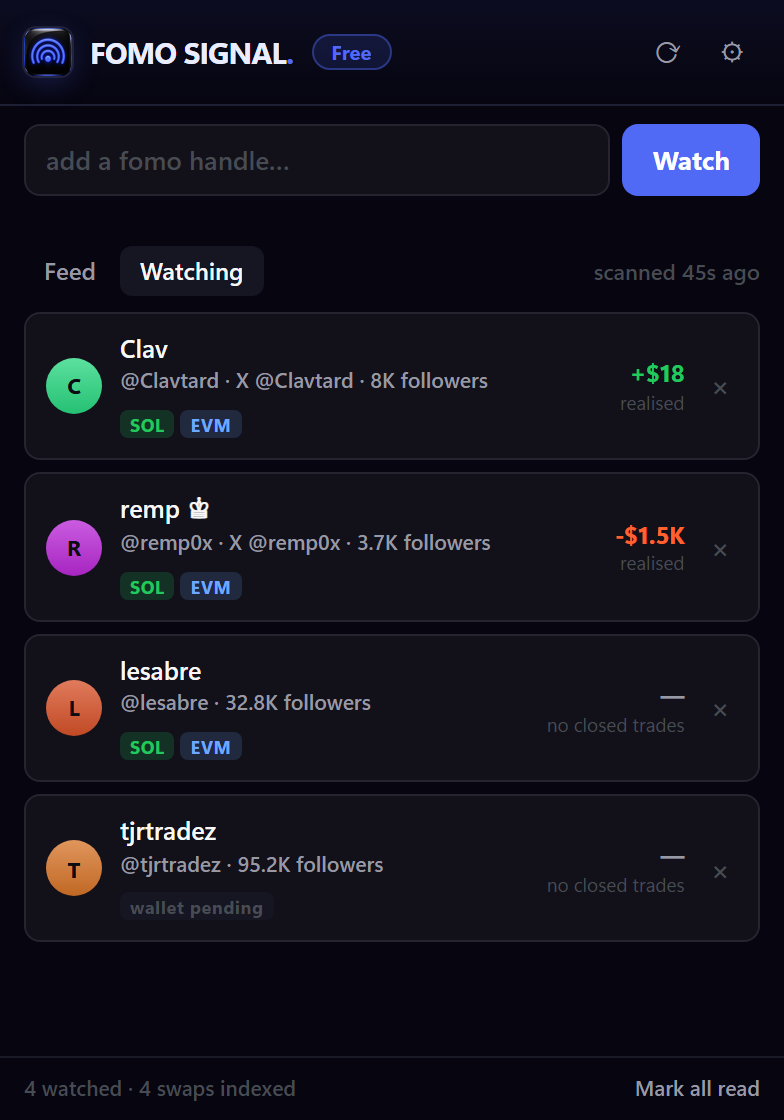
the rare oneType a name in the popup. It resolves the profile, both wallets, and quietly indexes their recent history so your first alert is a real one.
One tracked trader is checked per tick, in rotation, so the free Solana RPC never gets hammered and a scan stays about a second.
A Chrome notification the moment something fires. Click it and you land on Solscan or the token's chart, already loaded.
fomo doesn't sign trades with your wallet — a relayer does. So the standard way of reading a wallet's history comes back almost empty, and most tools quietly conclude there's nothing there.
It also gets the money right. A fomo trade settles in dollars, not SOL — the only SOL that moves is about two-tenths of a cent in account rent. Read it naively and a $1,100 trade shows up as three cents. Signal ranks every leg of the trade by dollar value, so the number you see is the number they spent.
It isn't on the Chrome Web Store yet, so it installs the developer way. This is normal and reversible — remove it any time from the same page.
chrome://extensions in a new tab.